

Part 1 · pages 5–23
understand the joint
anatomy · degeneration · muscles
Why the TMJ is unlike your knee or shoulder, what's actually inside it, how joints degenerate, and the question that changes everything: is yours joint pain or muscle pain?

Ships in 1–2 days.
$279$24911% off
Ships in 45 days. Cancel anytime before it ships.
$279$19929% off
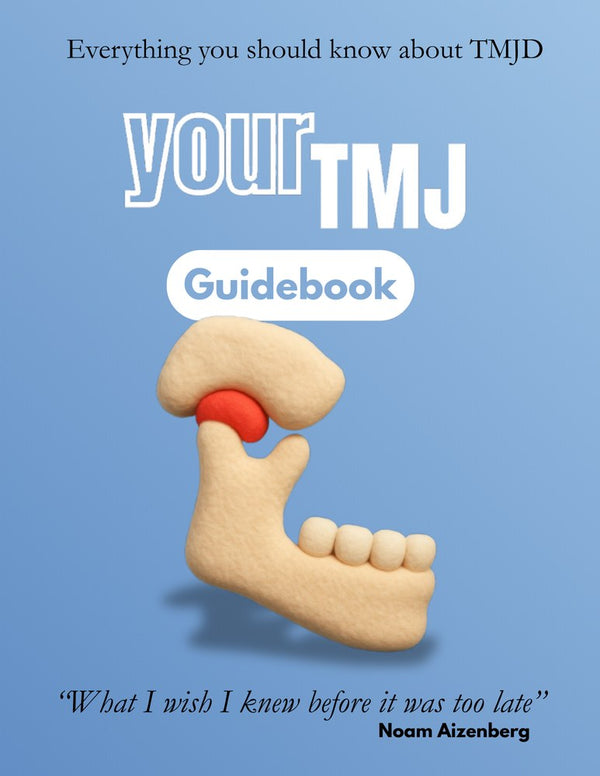
What I wish I knew before it was too late
Everything you should know about TMJD. Patient to patient.
Anyone who tells you there's a short explanation for TMJD is either uninformed or trying to trick you. This is 76 pages that tie it all together: the anatomy, the root causes most doctors skip, every treatment weighed against the research, and the at-home work that actually moves the needle.
What you'll walk away with
Complete the routine
Understand the joint (pages 5–23): why the TMJ is different, the anatomy you must know, the road to joint degeneration, muscles, joint pain vs muscle pain.
The root cause (23–33): posture, whether you're retracting the mandible, and the connection to sleep, breathing and development.
Treatment options (34–49): 15 of them, from imaging to surgery, each rated by risk and reward.
Symptoms explained (50–61): jaw pain, clicking, closed and open lockjaw, crunching, limited opening, headaches, ear pain and tinnitus, trigeminal neuralgia.
How to fix it (62–73): 17 manual therapy techniques, Rocabado's 6x6, Kraus' exercises, an intro to myofunctional therapy, product recommendations. Sources on 74.
People who want to actually understand TMJ: who are done with oversimplified answers on Google, tired of scrolling forums and support groups, and bouncing from doctor to doctor. Written patient to patient by an engineer who spent five years on it, not by a clinic selling a treatment.
It is not medical advice. It's the information you need to ask the right questions and know a scam when you see one.
A 76-page PDF, free. The button opens it instantly, no checkout and no email gate, so it's on your phone, tablet or laptop in seconds. Yours to keep, including future updates.
Dozens of research papers, interviews with doctors, hundreds of patient conversations, and a jaw that locked closed.
Five parts, in the order a patient actually needs them.
Part 1 · pages 5–23
anatomy · degeneration · muscles
Why the TMJ is unlike your knee or shoulder, what's actually inside it, how joints degenerate, and the question that changes everything: is yours joint pain or muscle pain?
Part 2 · pages 23–33
posture · sleep · breathing · development
The part most doctors skip. How to check whether your lower jaw sits too far back, why "stand up straight" is half right, and how sleep, breathing and facial development got you here.

Part 3 · pages 34–49
15 options, each rated by risk and reward
Imaging, posture, PT, heat, self-massage, pharmacology, massage, chiropractic, dry needling, Botox, arthrocentesis, arthroscopy, splints, orthodontics and surgery. What the research says, what it costs you, and when it makes sense.

Part 4 · pages 50–61
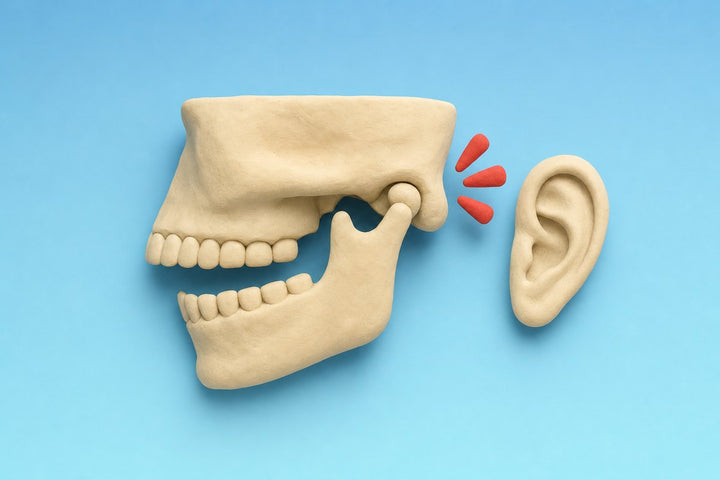
clicking · lockjaw · headaches · ear pain · tinnitus
Each symptom explained in plain language with what it means and what to do next: clicking and popping, closed and open lockjaw, crunching, limited opening, headaches, ear pain and tinnitus, trigeminal neuralgia.
Part 5 · pages 62–73
17 techniques · Rocabado 6x6 · Kraus · myofunctional
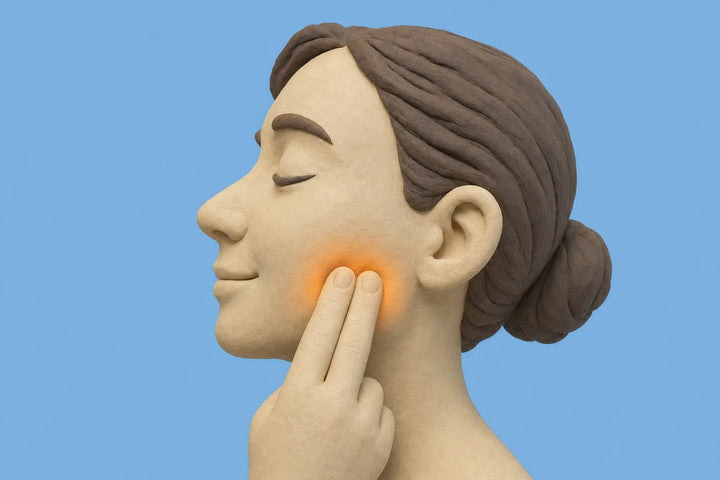
The manual therapy tutorials: internal lateral pterygoid release, masseter release, jaw mobilizations and distractions, isometrics, the classic exercise routines, and the products worth your money.
The book weighs each of its 15 treatment options by risk and reward before it explains it. The base of the pyramid is where it tells you to start; the top is where it tells you to ask hard questions first.
The ratings are the author's read of the research and of his own treatment history, explained option by option in the book. Not medical advice.
Word for word, from verified yourTMJ Pen reviews that talk about the guidebook.
The most valuable part of my purchase
“…wished there was some kind of all-in-one resource available on the subject to help me through this very complicated subject matter — which turns out, is Noam's guidebook. As a trained science journalist, I can say it's very well done (and cites its sources), and this guidebook honestly is the most valuable part of my purchase.”
More in ten pages than in ten years
“Let me just say, WOW. 75 pages of detailed, meticulous research. I'm only 10 pages in so far, and I've learned more about TMJ in those ten pages than I have in ten years of personal experience. I was expecting a little perhaps 5 page booklet, not a highly detailed and informative research paper.”
Tips that have helped me so much
“The guidebook that came with it has some wonderful tips that have helped me so much.”
Obviously took a long time to put together
“Comes with a handy pdf that helps you understand tmj in a comprehensive form that obviously took a long time to put together.”
So informative and thorough
“The free PDF that comes with it is so informative and thorough.”
Trigger points and exercises
“The help guide also shares trigger points and exercises that are educational and helpful.”
A guide to the muscle groups
“I appreciate that there was a guide for me to target the different muscle groups that are impacting my jaw.”

About the author
"I'm not a dentist. I'm not a PT. I'm not a surgeon. But I am an Ivy League educated engineer who, over the past five years, has made it my mission to understand TMJ disorders to their core. I've interviewed hundreds of patients, dozens of doctors, and read almost every piece of research I could get my hands on."
"The sad thing for me is that, knowing what I know now, I could've prevented what may now be irreversible TMJ damage. My goal is to pass it on to you."
Noam · engineer, 5+ year TMJ patient, inventor of yourTMJ Pen
No. It's written patient to patient, by an engineer, and it says so on the first page. Its job is to make you the most informed person in the room: able to ask the right questions, understand the answers, and know a scam when you see one.
A 76-page PDF, free. The download button opens it instantly: no checkout, no email gate. Read it on your phone, tablet or laptop, and keep it. Updates are included.
No. The book covers 15 treatments and 17 at-home techniques, and the pen comes up once, in the product recommendations, with the author's own bias flagged. Heat and self-massage are the two tools the at-home chapter leans on, and the pen is the tool he built for them.
The reader who called it "more about TMJ in ten pages than in ten years" had ten years of it. The root-cause and treatment chapters are written for people who have already tried things, so you can tell what was worth it and what wasn't.
It's about 21,000 words, an evening or two. The author's advice is to read all of it: "you'd spend 100x the amount of time figuring all this out through forums, research papers and doctors."
Not a single word in this book was written by AI. I spent around 6 months putting it together and I'm really proud of how it turned out.
Yes. The author asks readers to flag anything explained poorly or incorrectly, and the book is revised from that input. Your download includes future versions.
Stop guessing about your jaw
76 pages, free, instant download, read anywhere. The knowledge the author wishes he'd had before it was too late.
Download the guidebook
Gen 2 is here — scratch to reveal your launch offer
You've Won $15 Off
+FREE Gifts
By signing up you agree to receive email marketing. You can unsubscribe at any time.

